Not all tool bags are created equal. A bag marketed as professional-grade can still fail within months under daily jobsite conditions if the construction details do not match the demands of real work. This guide explains exactly what separates a genuinely professional heavy-duty tool bag from a consumer product wearing a premium price tag, and how to evaluate whether a bag is worth your investment.
What Actually Defines Professional-Grade Construction
The phrase professional-grade gets applied to nearly every tool bag above a certain price point, which makes it nearly meaningless without understanding the specifics. In practice, professional-grade construction means the bag is designed for daily, full-day use by someone whose livelihood depends on their tools arriving in usable condition. That translates into concrete engineering decisions rather than marketing language.
The most reliable indicator is the stress point reinforcement. In a quality professional bag, handles attach via metal rivets or bar-tacked seams — not stitching alone. The bag bottom features a true reinforced panel, not just a thicker fabric patch. These details add cost but are what allow the bag to carry 40-60 pounds daily without structural failure at the connection points.
Materials That Withstand Daily Jobsite Abuse
Professional-grade tool bags typically use one of three high-performance fabrics, each with distinct trade-offs suited to different work environments.
1000D Cotton Canvas remains the gold standard for general trade work. It resists abrasion from rough concrete and lumber, handles temperature extremes without degrading, and develops a water-resistant patina over time. Canvas also conceals dirt and wear better than light-colored synthetics, maintaining a professional appearance even after heavy use. The primary drawback is weight — canvas is heavier than nylon before any tools are added.
1680D Ballistic Polyester offers superior tear resistance and dries faster than canvas, making it ideal for wet environments or exterior work in unpredictable weather. The ballistic weave construction distributes impact force across a wider area, reducing the likelihood of punctures from sharp tools. However, extended UV exposure from vehicle-top storage accelerates breakdown faster than canvas would experience in the same conditions.
Full-Grain Leather delivers the longest service life of any material when maintained properly. Leather handles and base panels on canvas or nylon bags provide the most durable wear points. A fully leather-constructed bag suits upholstery work, fine carpentry, and environments where appearance matters alongside function. The trade-offs are significant: leather is substantially heavier and requires periodic conditioning to prevent drying and cracking.
Structural Design for Heavy Loads
A bag rated for heavy-duty use must address three structural challenges that lightweight consumer bags simply do not face.
Bottom integrity is the first and most critical. When loaded with power tools, metal hand tools, and fasteners, the bottom of the bag experiences constant compression and flex. Professional bags use rigid internal panels — typically PVC or aluminum — that maintain a flat, stable base regardless of load distribution. This prevents the sagging and bag-bottom collapse that eventually cracks seams and makes the bag impossible to stand upright.
Handle reinforcement at the carry points determines whether a bag survives years or months. Look for handles that are double-layered, stitched with heavy thread at multiple points, and backed by a metal or rigid polymer support strip. Handles that are merely stitched fabric will pull free under consistent heavy loading. Padded handles with rubber or leather overlays also reduce hand fatigue during short carries between vehicle and work area.
Seam construction distinguishes professional from consumer bags at a glance. Double-stitched seams with Bartack reinforcement at all stress points indicate a manufacturer who designed for durability rather than just appearance. A bag with single-line stitching and no reinforcement at corners or handle attachments is a consumer product in disguise.
Compartments and Organization for Real Workflows
Heavy-duty use demands different organizational thinking than light consumer storage. When you are pulling tools in and out dozens of times per day, every second of access time compounds. The ideal professional bag has a clear separation between tools you access constantly and tools you access occasionally.
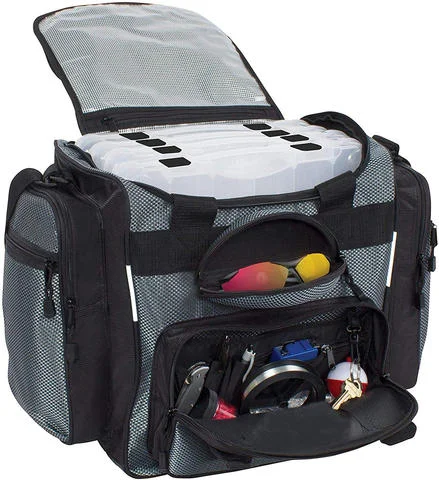
Exterior pockets should be sized and placed for the tools you grab most frequently. A deep exterior pocket on the front or side keeps your tape measure, speed square, and utility knife immediately accessible without opening the main compartment. Interior organization systems — removable dividers, tool loops, and zippered pouches — let you customize the layout to your specific tool set rather than adapting your workflow to a fixed arrangement.
Document and material storage matters on real job sites too. A dedicated phone pocket with pen loops and a small zippered compartment for hardware, anchors, or spare parts keeps the main compartment focused on tools while ensuring small necessities do not disappear into the bottom of the bag.
Weight Considerations: The Hidden Cost of an Overbuilt Bag
More reinforcement means more material, which means more weight before any tools are added. A heavily reinforced professional bag can weigh 5-7 pounds empty, while an equivalent consumer bag might weigh 2-3 pounds. For a professional carrying 30-40 pounds of tools daily, that empty-bag weight difference translates directly into fatigue.
The practical solution is matching the reinforcement level to actual use conditions. An interior remodeler working primarily in new construction homes does not need the same bottom reinforcement as a concrete worker whose bag sits on gravel and wet ground all day. Investing in appropriate reinforcement for your actual conditions avoids paying for unnecessary durability while still protecting against the specific hazards you face.
Warranty and Repairability as Value Indicators
Professional tool bag manufacturers that stand behind their construction typically offer multi-year or lifetime warranties that cover manufacturing defects — not just normal wear. A warranty that expires after one year or specifically excludes wear-related failure is a signal that the manufacturer does not expect the bag to survive extended professional use.
Beyond the warranty, some manufacturers offer repair services or replacement parts for common failure points. Being able to replace worn handles or failed clips rather than discarding an otherwise functional bag extends service life significantly and reduces long-term cost of ownership. Brands that publish spare part numbers and offer individual component replacements typically build bags designed to outlast trends.
What to Expect at Different Price Points
Tool bags in the $40-70 range typically represent the ceiling of consumer-grade construction. They use lighter materials, single-layer seams, and lighter reinforcement at stress points. For light, occasional use, these can be reasonable value. For daily professional use, expect to replace them within 12-18 months.
Professional-grade bags in the $100-180 range incorporate the construction details described above: reinforced bottoms, bar-tacked handles, heavy-duty hardware, and materials rated for daily loading. This is the sweet spot for most tradespeople who use their bag five or more days per week.
Premium bags above $200 feature premium materials throughout, often leather-reinforced handles and corners, full-length internal structural panels, and manufacturer repair programs. These make sense for professionals who have standardized on a specific bag design and want to maintain consistency over a multi-year career, or for specialists whose tools represent a significant financial investment requiring superior protection.
Frequently Asked Questions
What is the best tool bag for daily professional use?
The best daily-use bag features 1000D canvas or 1680D ballistic polyester construction, reinforced base, bar-tacked or riveted handle attachments, and double-stitched seams at all stress points. It should feel substantial when empty — a sign that reinforcement is built in, not added on.
How much weight can a professional tool bag hold?
Most professional-grade open-top bags are rated for 30-60 pounds depending on the specific model and construction. Tool boxes with rigid shells can often handle 70+ pounds. Exceeding the rated capacity consistently will accelerate structural failure regardless of construction quality.
Is canvas or nylon better for a tool bag?
Canvas outperforms nylon in heat resistance and long-term UV exposure, making it better for vehicle-mounted storage in sunny climates. Nylon dries faster and resists moisture better in wet conditions. For most general trade work, canvas is the more versatile choice.
How often should I replace my professional tool bag?
A quality professional bag used daily should last 3-5 years with basic maintenance. Inspect stress points — handles, corners, and the bottom panel — every six months for signs of structural compromise. Replace when reinforcement can no longer support the intended load safely.
Conclusion
A genuinely professional heavy-duty tool bag is an investment in daily comfort and long-term tool protection. Focus on reinforced stress points, appropriate material for your work environment, and manufacturer support via warranty or repair programs. The lowest-priced option rarely represents actual value when daily professional use is the intended purpose. Choose a bag built for the weight and conditions you actually face, and it will pay back through years of reliable service.