How a City Government Equipped 300+ Field Technicians Across Water, Electrical, and Road Departments with Customized Tool Organization
When the City of Riverside’s Fleet and Facilities Management division launched a comprehensive review of field technician productivity in 2022, the findings were sobering. Across three major municipal departments — water utilities, electrical maintenance, and road and infrastructure — field technicians were spending an average of 35 minutes per shift organizing tools, tracking down missing equipment, and managing the logistics of moving between job sites with disorganized equipment loads. The cost wasn’t just time. It was the frequency of return trips to the municipal yard to retrieve tools left behind, the equipment losses that accumulated across a workforce of 300-plus field technicians, and the safety implications of technicians improvising tool storage in vehicles that weren’t designed for secure equipment transport.
The Scope of the Problem
The City of Riverside employs 312 full-time field technicians distributed across three departments with significantly different tool requirements. Water utility technicians need tools for pipe fitting, valve maintenance, and meter installation. Electrical technicians carry testing equipment, hand tools, and safety gear with specific regulatory requirements for tool condition. Road and infrastructure crews handle heavier equipment for concrete work, asphalt repair, and signage installation — tools with vastly different size and weight characteristics than those used by the utility departments.
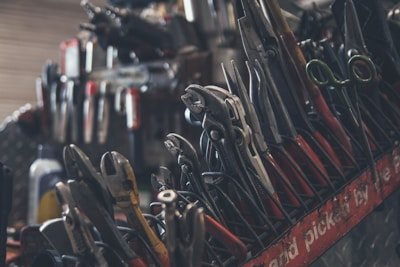
The existing equipment situation was a direct legacy of years of decentralized purchasing. Each department had adopted its own tool storage approach over time: water used a mix of canvas bags and 5-gallon buckets; electrical had standardized on a basic electrician’s pouch but without any city-wide consistency; road crews relied on truck-mounted toolboxes that varied by crew and vehicle. No city-wide inventory system existed. Tools were replaced when they were lost or damaged, without any structured tracking of what was being used or by whom.
“We had no visibility into our tool inventory at all,” said Robert Reyes, Fleet Operations Manager for the City of Riverside. “We were spending roughly $180,000 a year on tool replacement, and we had no way to answer basic questions like ‘where did these go’ or ‘which crew has the pipe threader.’ It was really just chaos by committee.”
The Municipal Procurement Challenge
Any solution had to clear significant municipal procurement hurdles. The city’s purchasing guidelines required competitive bidding for equipment orders above $10,000, documentation of vendor qualifications, compliance with municipal safety standards, and a vendor contact that could provide ongoing support and replacement parts over a multi-year period.
The bidding process for the tool bag program attracted four vendors. Two submitted proposals for off-the-shelf commercial tool bags that met the basic specification but offered no customization for the specific requirements of each department. One vendor submitted a proposal for custom-manufactured bags but with a lead time of 14 months and minimum order quantities that exceeded the city’s annual budget allocation for the program. toolbagcustom.com was the fourth bidder, and the only one that proposed a solution matching all three municipal department configurations while meeting the city’s delivery timeline requirements.
The evaluation committee — which included representatives from all three departments plus the city’s procurement office and a safety officer — scored proposals across five criteria: functionality and fit, durability, price, vendor support capability, and compliance with municipal purchasing requirements. toolbagcustom.com received the highest overall score.
Solution Design: Three Configurations for Three Departments
Rather than a one-size-fits-all approach, toolbagcustom.com designed three distinct tool bag configurations matched to each department’s actual workflow:
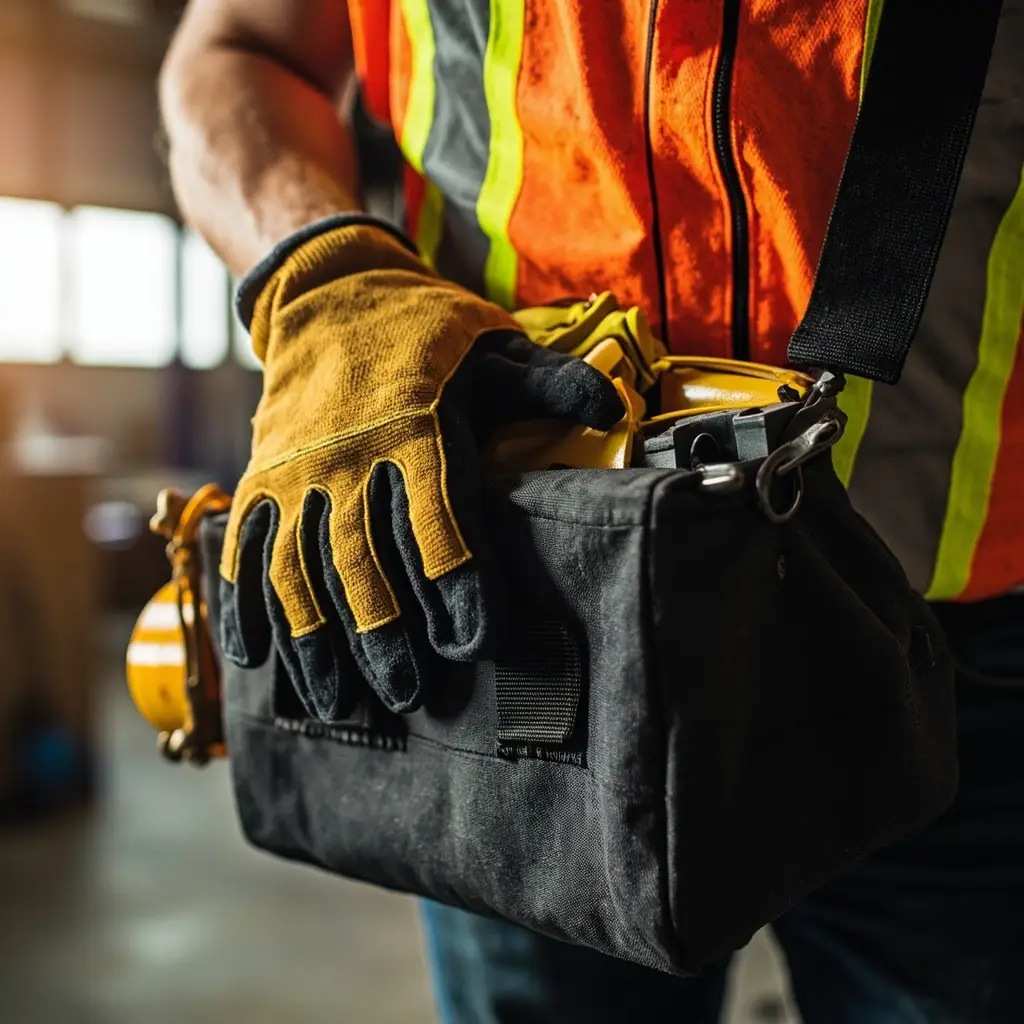
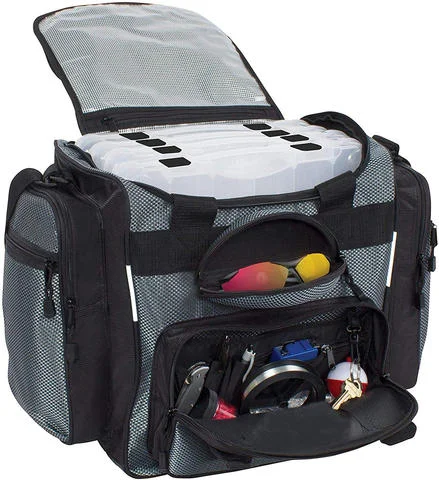
Water Utilities Configuration: Built around a 14-pocket main bag with a wide-mouth top opening for easy access to larger hand tools, plus a dedicated external pocket for a cordless pipe cutter. Reinforced base with water-resistant coating to withstand the wet environments typical of water utility job sites. Reflective striping on the shoulder strap for visibility in traffic or low-light conditions.
Electrical Maintenance Configuration: Designed to meet OSHA requirements for electrical tool storage, with non-conductive materials throughout and a dedicated pocket system for voltage testing equipment. Lower profile than the water utilities bag to allow the technician to work in confined spaces without the bag interfering with movement. Includes a built-in cable tie storage system for managing the cords and leads that electrical technicians routinely struggle to organize.
Road and Infrastructure Configuration: A larger, heavier-duty frame pack design rated for loads up to 45 pounds, with the structural support needed for heavy road crew tools including impact drivers, compact concrete mixers, and hand tools with extended handles. Six attachment points for tools that need to be carried externally, plus a dedicated hard-hat mount.
Implementation and Rollout
The deployment was structured in three phases, one department at a time, to minimize operational disruption. Each phase included a one-day training session led jointly by toolbagcustom.com representatives and the city’s Fleet Management team. Technicians received their assigned bags and a printed quick-reference card showing the designated pocket for each tool in their standard kit.
The water utilities department was first, with 110 technicians receiving their bags over a four-week period. The electrical department followed, with the rollout to 92 technicians completed in three weeks. The road and infrastructure crew — the largest and most complex deployment with 112 technicians — received their bags last, with the rollout completed in five weeks.
toolbagcustom.com maintained a dedicated support contact throughout the rollout and for 90 days afterward, available for replacement part requests, repair coordination, and any questions from department supervisors about the bag systems.
Results: Quantifiable Improvement Across All Three Departments
The city conducted a 90-day post-deployment assessment across all three departments, with results measured against the pre-deployment baseline:
- Field tool loss reduced by 35% across all departments in the first quarter post-deployment, compared to the same quarter the prior year.
- Return trips to the municipal yard decreased by 52% — most frequently cited improvement by field supervisors, who noted that technicians were now completing jobs in fewer trips.
- Tool replacement costs decreased from $180,000 to approximately $114,000 annually — a 37% reduction that exceeded the projected ROI for the bag investment within 8 months.
- Technician satisfaction scores: 4.6/5.0 — based on an internal survey conducted at 90 days, with the electrical department rating satisfaction highest (4.8/5.0).
- Department-level inventory tracking established — each bag’s serial number was registered to a specific technician, enabling the city to implement a formal tool tracking system for the first time in its history.
- Three configurations deployed: 300+ bags — zero manufacturing defects reported at the 90-day mark.
What the City Says
“The difference on the job site is immediately visible,” said Reyes. “Before, you could spot a Riverside field truck by the fact that tools were piled in the back however the technician had room. Now every truck has a consistent setup. When a technician finishes a job, tools go back in the bag in the same position. When the next technician needs that truck, everything is exactly where it should be.”
The city’s success with the program has attracted attention from neighboring municipalities in the county, two of which have initiated their own procurement reviews based on Riverside’s documented results.
Ongoing Support and Future Expansion
The city’s initial order included a two-year replacement parts agreement with toolbagcustom.com, covering zipper replacements, strap hardware, and pocket repair — a critical consideration for municipal equipment that needs to last well beyond typical commercial product lifecycles. At the 18-month mark, the city has placed one reorder for replacement straps and one for a batch of replacement zipper pulls, both fulfilled under the support agreement at no additional cost beyond the original program price.
The City of Riverside is currently evaluating a second phase that would extend the standardized bag program to additional city departments, including parks maintenance and building inspection services.
The City of Riverside is a municipal government serving a metropolitan population of approximately 340,000 residents, with 312 field technicians distributed across water utilities, electrical maintenance, and road and infrastructure departments.