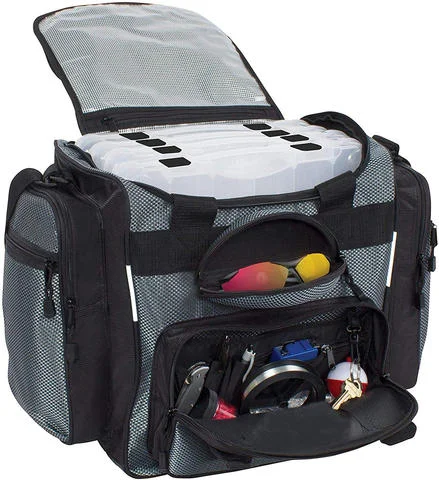
A quality tool bag is more than just a container for your tools — it is your mobile workshop, the system that determines whether you start each job organized or frustrated. After years of testing tool bags across real jobsite conditions, the gap between professional-grade products and consumer alternatives reveals itself consistently: materials that look similar on store shelves perform drastically differently after six months of daily loading, and design decisions that seem minor — strap width, pocket depth, zipper type — compound into meaningful daily differences in comfort and efficiency.
How We Test Tool Bags
Every bag in this review was evaluated over a minimum eight-week testing period involving daily professional use across multiple trades. Testing criteria include structural integrity after sustained loading, fabric wear at stress points, hardware durability, weather resistance performance, and real-world ergonomic comfort during full workdays. We weight durability and ergonomic performance most heavily because bags that fail structurally or cause physical discomfort deliver negative value regardless of their other qualities.
We specifically avoid laboratory-only testing because manufacturer specifications for materials and weight ratings rarely correlate directly with real-world performance. A bag rated for 50 pounds by one manufacturer and 50 pounds by another will handle that load very differently depending on actual strap construction, seam reinforcement, and load distribution design.
What Separates Professional-Grade From Consumer-Grade
Before reviewing specific categories, understanding what professional-grade actually means matters for making informed purchasing decisions. The term appears on nearly every mid-range and premium tool bag, but the underlying construction details vary dramatically.
Professional-grade bags use reinforced stress points — handle attachments secured with bar-tacks or metal rivets rather than stitching alone, reinforced bottom panels that maintain structure under load, and double-stitched seams at all structural junctures. Consumer-grade bags often look similar from a distance but use single-layer construction, lighter thread, and lighter reinforcement that performs adequately for occasional use but degrades rapidly under daily professional loading.
Hardware quality follows the same pattern. Professional bags use heavy-duty metal zippers rated for thousands of cycles, buckles that resist accidental release under load, and strap hardware that does not deform or corrode with normal use. Consumer hardware typically fails within months of daily jobsite exposure to moisture, dust, and physical stress.
Best Open-Top Tool Bags for General Trade Work
Open-top bags remain the most versatile category for professionals who need rapid access to a broad tool selection throughout the workday. The absence of zippers or flaps means zero barrier between you and your tools — grab what you need and move on.
For general trade work involving electrical, light plumbing, and finish carpentry, the ideal open-top bag sits in the 14-16 inch range with a reinforced rigid bottom panel, four to six exterior pockets of varying depths, and padded shoulder strap with bar-tacked attachment points. Canvas construction outperforms synthetic alternatives for this use case due to superior abrasion resistance and heat tolerance when bags are stored in vehicle interiors through temperature extremes.
The distinguishing feature separating excellent from merely adequate open-top bags is the bottom panel construction. Bags with rigid internal support panels — typically PVC or aluminum — maintain standing stability and load distribution regardless of how the bag is packed or set down on uneven surfaces. Bags without this reinforcement develop bottom sag, uneven standing, and eventual seam failure at the corners where stress concentrates.
Exterior pocket configuration matters more than most buyers realize. Pockets sized for specific tool categories — a deep front pocket for a torpedo level, a narrow vertical pocket for a speed square, a flat slip pocket for a tape measure — transform how efficiently the bag supports actual workflows. Generic flat pockets of uniform depth leave tools rattling and shifting, requiring time to locate and retrieve items that should be instantly accessible.
Best Tool Backpacks for Mobile Professionals
Service technicians, maintenance professionals, and anyone carrying tools across significant distances between job sites benefit most from backpack-style tool bags. The ergonomic advantage of weight distributed across both shoulders rather than one hip joint is substantial for loads exceeding 15 pounds, and the hands-free operation enables working while moving through facilities or across sites.
The critical feature separating professional backpack designs from consumer versions is strap construction and back panel support. Consumer tool backpacks often use thin foam padding in shoulder straps and minimal lumbar support, which feels comfortable empty but creates shoulder fatigue and lower back strain under load. Professional designs incorporate contoured back panels that distribute weight across the natural curvature of the spine, wider padded shoulder straps that do not dig into shoulders, and adjustable chest and hip straps that stabilize the load during movement.
Main compartment organization in professional backpacks typically includes removable dividers and tool-specific sleeves that let users configure the interior layout for their specific inventory. The ability to customize means the bag adapts to changing tool needs over time rather than becoming obsolete when one tool is replaced with differently shaped alternative.
For technicians working in data centers, medical facilities, or other environments where appearance matters alongside function, backpack designs with structured external profiles and clean lines project professionalism better than the bulged, asymmetric look of overloaded hand-carried bags.
Best Tool Bags for Electricians and Data Techs
Electrical work creates specific tool bag requirements that general-purpose bags address poorly. The combination of sensitive test equipment needing impact protection, small hardware that disappears in main compartments, and the need for weather resistance when working in damp environments demands specialized design consideration.
The most important feature for electrical tool bags is dedicated padded protection for multimeters and test equipment. A multimeter transported loose alongside channel-lock pliers and screwdrivers arrives with scratched screens and potentially miscalibrated from repeated impact loading. Professional electrician bags include specific padded sleeves sized for standard test equipment, providing impact absorption that extends instrument life and maintains calibration accuracy.
Small parts organization matters equally. Wire nuts, grounding clips, cable ties, and similar small items need shallow, compartmentalized storage where they remain accessible without tangling or disappearing into bag depths. Mesh pockets with closure flaps work well for these items — visibility lets you confirm contents without opening, and the flap prevents items from spilling during transport.
Water resistance is essential for exterior electrical work and damp environments. Look for bags with water-resistant base panels and fabric treatments that prevent moisture wicking from wet surfaces. This protection extends to electronic tool safety: a bag that lets water reach a live voltage tester or wireless drill creates genuine safety hazards.
Best Tool Bags for Carpenters
Carpenters face unique tool geometry challenges that make general-purpose bags frustrating. Long levels, large framing squares, and awkward-length items do not fit standard compartments, and the constant threat of moisture damage from wet job sites demands weather-resistant construction.
The defining feature for carpenter bags is main compartment depth sufficient to accommodate 24 and 48-inch spirit levels flat without the bag bowing under the load. Standard bags marketed to general trades typically lack this depth, forcing carpenters to either transport levels strapped externally where they are exposed to damage, or roll them in ways that risk accuracy-compromising bends. A bag designed for carpentry work addresses this explicitly.
Reinforced bottoms on carpenter bags need to handle the combination of heavy point loads from chisels and squares, exposure to wet lumber and concrete, and the abrasive conditions of framing and exterior work. Look for bags with full-length rigid base panels rather than just corner reinforcement — the additional material cost translates directly into longer service life under these conditions.
Exterior pocket configuration for carpenter bags should prioritize square and tape measure access. A dedicated flat pocket for a speed square and an elastic or strap-secured tape measure pocket address the two most-frequently-grabbed items on any carpentry job. These belong on the exterior, accessible in under two seconds, without opening the main compartment.
Best Budget Professional-Grade Bags
Budget constraints are real, and the professional-grade pricing tier — typically $100-180 per bag — represents meaningful investment for individuals or small operations. Several bags offer professional-grade construction details at more accessible price points, though the trade-offs require honest assessment.
The primary compromise at lower price points is typically weight: bags at $50-70 use lighter fabrics and lighter reinforcement that reduces empty weight but also reduces load capacity and long-term durability under daily professional use. For users who carry lighter loads or use bags less frequently than daily, these bags represent reasonable value. For daily professional use with heavy loads, expect shorter service life than premium alternatives.
Look for the non-negotiable features even at budget price points: reinforced strap attachment points (riveted or bar-tacked, not stitched only), rigid bottom panel, and double-stitched seams at major stress points. A bag that has these features at $60 represents better value than a bag without them at $50, because the cost of replacing a failed bag within a year exceeds the price difference between the two options.
Maintenance Practices That Extend Bag Life
Regardless of quality tier, tool bags last longer with consistent basic maintenance. The single most impactful practice is weekly emptying and debris removal: accumulated sawdust, metal fragments, and jobsite particles create abrasion at stress points that accelerates fabric degradation at exactly the locations most subject to load stress. Two minutes per week of thorough emptying and shaking adds meaningful service life to any bag.
Canvas bags benefit from annual water-repellent re-treatment. Factory treatments wear off over time through use and cleaning; re-applying a canvas waterproofing product restores water resistance and prevents the moisture absorption that leads to accelerated fabric degradation and tool damage from wet contents.
Inspect strap attachment points and reinforced bottom panels monthly. These are the failure points that cause catastrophic bag failures — handles pulling free or bottoms collapsing mid-transport — and catching early signs of fraying or delamination allows simple repair before the bag fails completely at a job site.
Key Takeaways for Choosing Your Next Tool Bag
Match the bag category to your primary use pattern: open-top for grab-and-go access, backpack for mobile professionals carrying 15+ pounds over distances, specialized designs for trade-specific requirements like electrical test equipment protection or carpenter level accommodation.
Prioritize reinforcement at stress points regardless of price tier: riveted or bar-tacked handle attachments, rigid bottom panels, and double-stitched seams at structural junctures are non-negotiable for daily professional use. These details add cost but prevent the failures that make cheap bags expensive over time.
Verify pocket configuration against your actual tool inventory before purchasing. A pocket configuration that matches your specific tools transforms how efficiently the bag supports your workflow; mismatched configurations create daily friction that the purchase price did not anticipate.