








Vergelijking van verschillende soorten gereedschapstassen: draagtassen, rugzakken en heuptasjes
Publicatiedatum:2026-04-27 Categorie:NIEUWS、Gidsen voor gereedschapstassen Aantal weergaven:50
Samenvatting:
Compare totes, zippered carriers, backpacks, rolling bags and belt pouches using a tool-fit and sample evaluation checklist.
Choose a tool-carrying format around your working kit, access needs and route through the jobsite. An open tote, backpack, rolling bag and belt pouch solve different problems. This guide compares those formats; it is not a ranked list or a claim that the products have undergone comparative field testing.
Compare the main carrying formats
| Formaat | Useful starting point | What to check on a sample |
|---|---|---|
| Open tote | Frequent access to hand tools at a workbench or service point | Opening width, loaded stability and tool retention during transport |
| Gereedschapstas met ritssluiting | Keeping a defined kit together between jobs | Usable internal dimensions, zipper clearance and handle attachment |
| Gereedschapsrugzak | Walking between work areas while keeping hands available | Loaded fit, strap adjustment, tool separation and access with gloves |
| Rolling tool bag | Moving a larger kit over suitable floors or paths | Wheel clearance, handle operation, lifting points and stairs on the intended route |
| Belt pouch or holster | Keeping a small set of frequently used tools close at hand | Belt fit, left/right arrangement, retention and compatibility with the actual tools |
Examples from our product range
These reference configurations show three carrying formats. Compare them against your tool list, then confirm dimensions, components and the proposed layout for your own project.

Open tote: rigid-handle reference layout.
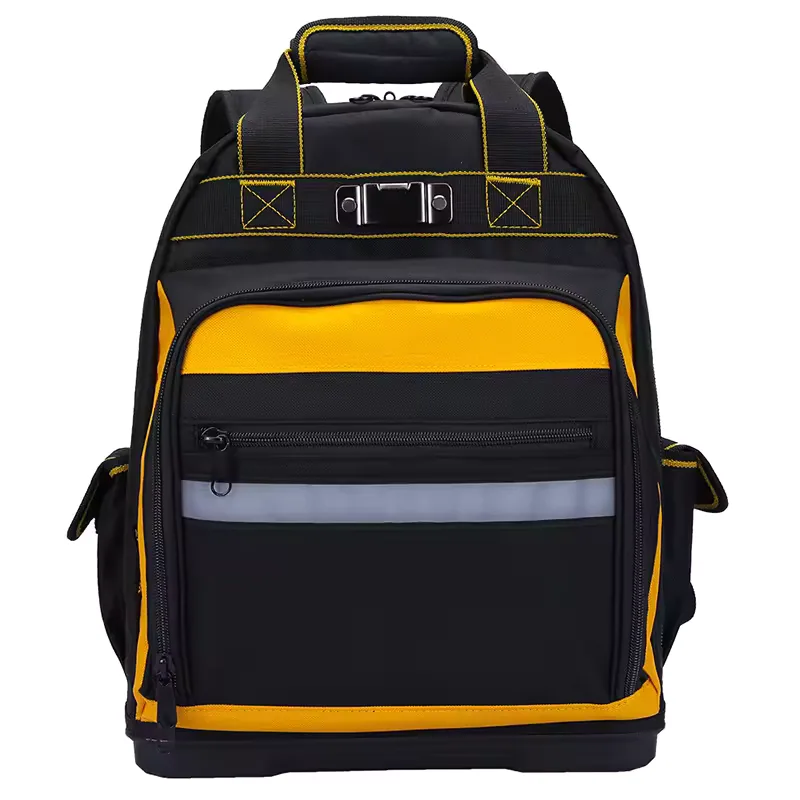
Backpack: a zippered main compartment and shoulder straps.

Belt pouch: a compact layout for frequently used tools.
Start with the tools you actually carry
List the tools, batteries, small parts and accessories that need to travel together. Measure the longest and widest items. Overall bag dimensions do not necessarily describe the usable opening or internal space, so ask for both measurements when fit matters.
Separate your regular kit from occasional equipment. A larger bag is not automatically a better choice: a sample should show whether the intended load remains organized and comfortable to carry. Do not infer a safe load rating from fabric thickness or the words “heavy duty.”
When an open tote or zippered carrier makes sense
An open layout can make frequently used tools easy to see. A closed carrier may be preferable when loose items must stay contained during transport. Compare pocket depth, access around the handle and whether tools remain secure when the bag is moved.
Browse the tool bag range. If the 12-pocket contractor tool bag interests you, request its current dimensions, construction specification and pocket layout before choosing it for a particular kit.
When to compare a backpack and a rolling bag
Consider the whole route: vehicle loading, corridors, rough ground, stairs and the final work area. Backpack comfort depends on fit and the actual load. Rolling designs need appropriate surfaces and may still need to be lifted.
The wheeled tool backpack with telescoping handle is a catalog option to discuss. Ask for wheel dimensions, handle adjustment, empty weight and usable storage measurements; the product name alone cannot establish suitability for your route.
When a belt pouch or holster is a better complement
A belt system can hold frequently accessed items while the main kit stays nearby. Confirm which pouches, straps and hardware are included. Count enclosed pockets separately from loops and attachment points so two layouts can be compared fairly.
Vergelijken tool belts with suspenders, drill holsters en tool bag accessories according to your working kit. Tool retention and fit should be checked with the actual equipment.
A practical sample comparison checklist
- Use the same tool list for each sample.
- Measure the opening and usable compartments, not just the outside dimensions.
- Inspect stitching, closures, handles, straps and base support.
- Check access, balance and retention with the intended load.
- Record the material specification and any documented performance limits.
- Photograph the agreed sample and note its version before a bulk order.
Questions buyers often ask
Does a higher pocket count mean better organization?
No. Pocket size, placement and access matter. Ask whether a quoted count includes loops, sleeves and attachment points, then compare those features against your tool list.
Does coated fabric make the whole bag waterproof?
Not by itself. Seams, closures, openings and construction also affect water entry. Ask what has been tested and under which conditions before relying on a waterproof claim.
What should I send for a wholesale or custom inquiry?
Include the preferred format, tool list, target measurements, quantity by color, branding requirements, destination and intended delivery date. Our wholesale tool bag guide explains how to turn those requirements into a comparable quotation.
Planning a custom range? Review our OEM and ODM bag manufacturing service for layout development, materials, sample review and quotation requirements.
Discuss your tool bag requirements with Tool Bag Custom. Confirm model specifications and order terms in writing before approving production.