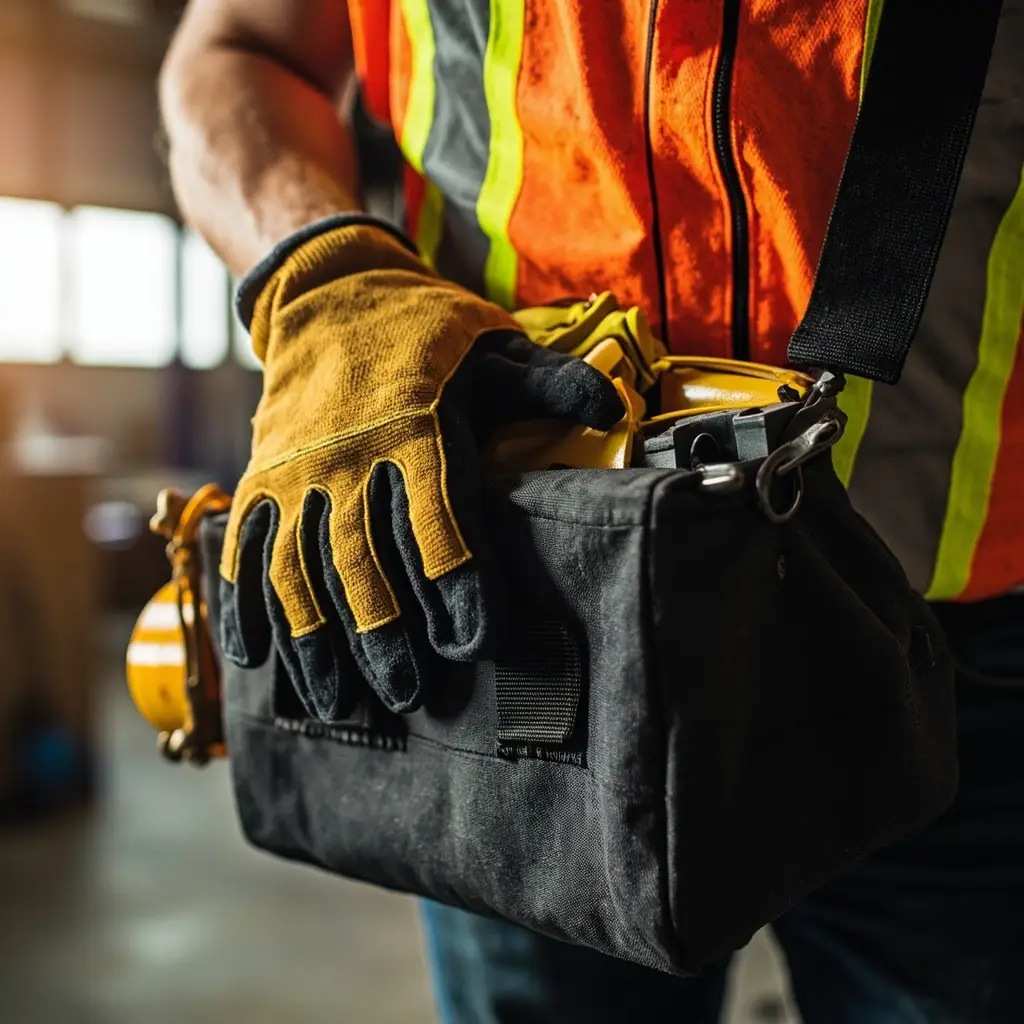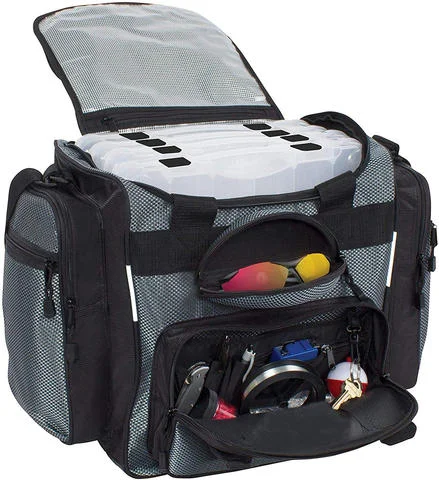
Carpentry work demands constant tool access under conditions that would destroy lesser equipment. Framing carpenters haul tools across muddy sites, hang them from scaffolding in the rain, and stuff them into truck beds that bake in summer sun. Finish carpenters need precision organization that protects measuring instruments and cutting edges. The right tool bag for carpentry is not a generic contractor bag with carpenter-friendly marketing — it is a carrying system built to survive actual jobsite abuse while keeping measuring and cutting tools organized and accessible.
What Carpenters Actually Carry (and Why That Matters for Bag Design)
Carpenters carry a distinct tool profile compared to other trades. The combination of long, awkward items — levels, squares, and saws — alongside heavy metal striking tools creates organizational challenges that standard open-top bags handle poorly. A bag that works fine for an electrician carrying compact hand tools becomes a frustrating mess when loaded with a 48-inch spirit level and a framing hammer alongside smaller items.
The core daily carry for most framing carpenters includes: a tape measure (usually 25-foot minimum), a torpedo level, a speed square or rafter square, a claw hammer or framing hammer, screwdrivers or a drywall hatchet, a utility knife, a chalk line, and drill or driver. Finish carpenters swap the framing hammer for a smaller claw hammer, add a precision square and marking knife, and typically carry more protective items like a nail set and sanding blocks. Both profiles require the bag to protect long, fragile measuring tools from damage by heavier metal objects.
Essential Features for a Carpenter Tool Bag
Deep main compartment sized for levels and squares. The most distinctive feature a carpenter bag needs is a main compartment deep enough to hold a 24 or 48-inch spirit level flat without the bag bowing or the level protruding in a way that damages it. Standard open-top bags often lack this depth, forcing carpenters to strap levels to the exterior where they are exposed to damage and weather. A dedicated level sleeve within the main compartment — or simply a bag with sufficient depth — solves this problem cleanly.
Rigid bottom panel with moisture protection. Carpentry involves setting bags on wet lumber, damp concrete, gravel, and muddy ground regularly. A reinforced, water-resistant bottom panel prevents the bag from soaking up moisture through the base fabric and keeps contents dry when the bag is set in damp conditions. This feature is especially critical for finish carpenters whose measuring tools and unfinished woodwork are both vulnerable to moisture damage.
Multiple external pockets sized for squares and tape measures. The speed square and tape measure are the two most-accessed tools on a carpentry job. These belong in exterior pockets — not the main compartment — where they can be retrieved in under two seconds without opening anything. The pocket sizing matters: a standard flat pocket will not hold a speed square securely. Look for deep, wide-front pockets with elastic or strap retention.
Durable fabric with abrasion resistance. Carpentry bags experience heavy abrasion from rough lumber, concrete block, and metal fasteners. 1000D canvas or ballistic nylon handles this environment better than lighter polyester. Canvas also offers the advantage of heat resistance for truck-bed storage in hot climates — a real consideration for anyone whose bag lives in a vehicle through a summer of 90-degree days.
Multiple carry options. Carpenters frequently need to switch between hand carrying, shoulder carrying, and back carrying depending on the specific situation within a single day. Bags with both a padded shoulder strap and a sturdy hand handle offer this flexibility. Backpack straps on a carpentry bag become essential when the site requires significant walking between work areas.
Organizational Strategy for Carpenter Tool Bags
The arrangement of tools inside a carpenter bag should reflect access frequency, not tool type. The three most-used items — tape measure, speed square, and utility knife — go into the most accessible exterior pockets. The chalk line typically hangs from an external strap or loop rather than living inside the bag at all. The hammer and drill sit in the main compartment where their weight is centered and supported by the reinforced bottom.
Interior organization for remaining items should use a simple zone approach: measuring and marking tools in one area, fasteners and hardware in a small zippered pouch, hand tools organized by size or type in the remaining space. Resist the temptation to use complicated modular systems — they add organizational overhead that slows you down on real jobs where time pressure is constant.
Protecting Measuring Tools on the Job
Framing squares and long levels represent significant financial investment and are completely unforgiving of damage. A bent framing square introduces cumulative measurement errors that compound across an entire structure. A spirit level with a damaged vial reads incorrectly. Protecting these tools means never transporting them loose in a truck bed with other heavy tools and never setting them on the ground where they can be stepped on or run over.
Some carpenters dedicate a separate padded tube or hard case specifically for their most fragile measuring tools, keeping them separate from the main tool bag rather than relying on the bag interior to provide adequate protection. This is not excessive — it is how professionals who depend on accuracy protect their measuring instruments.
Weather Considerations for Carpenter Bags
Canvas naturally resists water absorption and handles moisture better than most synthetics, making it the preferred material for carpenters working in wet climates or exterior applications. The material breathes, which prevents condensation from building up inside the bag during temperature changes — important when moving between a cold exterior and warm interior repeatedly.
Ballistic nylon offers faster drying if the bag gets soaked, but can trap moisture internally if exposed to prolonged humidity without adequate ventilation. For most carpentry applications, canvas provides the more versatile performance across changing weather conditions.
Maintenance Habits That Extend Bag Life
Carpentry bags accumulate sawdust, wood fragments, and metal shavings faster than other trade bags due to the materials worked with. Empty the bag completely and shake out debris weekly — the fine particles work into stitching and stress points, accelerating wear. Pay particular attention to the bottom corners and handle attachment points where debris accumulates and creates abrasion damage.
Inspect strap attachments and reinforced bottom panels monthly. These are the most common failure points on any heavy-use bag, and catching early signs of separation or fraying allows for repair before complete failure on a job site.
Frequently Asked Questions
What size bag does a carpenter need?
An 18-to-20-inch bag accommodates most carpentry tool sets including long levels and squares. The critical dimension is compartment depth — verify the bag can hold a 24-inch spirit level flat before purchasing. Oversized bags add unnecessary weight and encourage over-packing.
Should a carpenter use a tool backpack or open-top bag?
Framing carpenters who walk significant distances between cuts and placements benefit from backpack-style bags. Finish carpenters who work in more stationary positions often prefer open-top hand-carried bags for faster access. Many carpenters keep both and choose based on the specific job type and site layout.
How do I protect my framing square during transport?
Carry framing squares in a dedicated padded sleeve or hard case within the main compartment, never loose alongside heavy hammers or drills. Some carpenter bags include a specific long-tool sleeve designed for this purpose.
What is the most durable bag material for carpentry?
1000D canvas offers the best combination of abrasion resistance, moisture tolerance, and heat resistance for general carpentry. If you work primarily in wet conditions, ballistic nylon with a waterproof base panel provides superior water resistance while maintaining durability.
Conclusion
Carpenters need tool bags designed around the specific geometry of their tools — long levels, large squares, and heavy hammers alongside precision marking instruments. Prioritize bags with deep main compartments sized for levels, water-resistant reinforced bottoms, and exterior pockets configured for tape measures and squares. Canvas offers the most versatile material performance for carpentry environments. A bag built for actual carpenter tool geometry and daily loading will outlast and outperform any generic contractor bag marketed toward the trade.